
Reviewed by Dr. Mithun Panchal, Plastic, Cosmetic & Hair Transplant Surgeon , M.B.B.S ,M.S ( Gen Surg ), M.Ch ( Plastic Surgery) — Essence Aesthetic Clinic, Vadodara
A hair transplant treatment moves healthy hair follicles from a donor area to thinning or balding parts of the scalp to create fuller, natural-looking coverage. However, the procedure itself is only one part of the process. Preparation before surgery and proper aftercare can influence healing, graft protection and the final result. Avoiding common mistakes from choosing the wrong clinic to ignoring post-surgery instructions can make recovery smoother and reduce preventable complications.
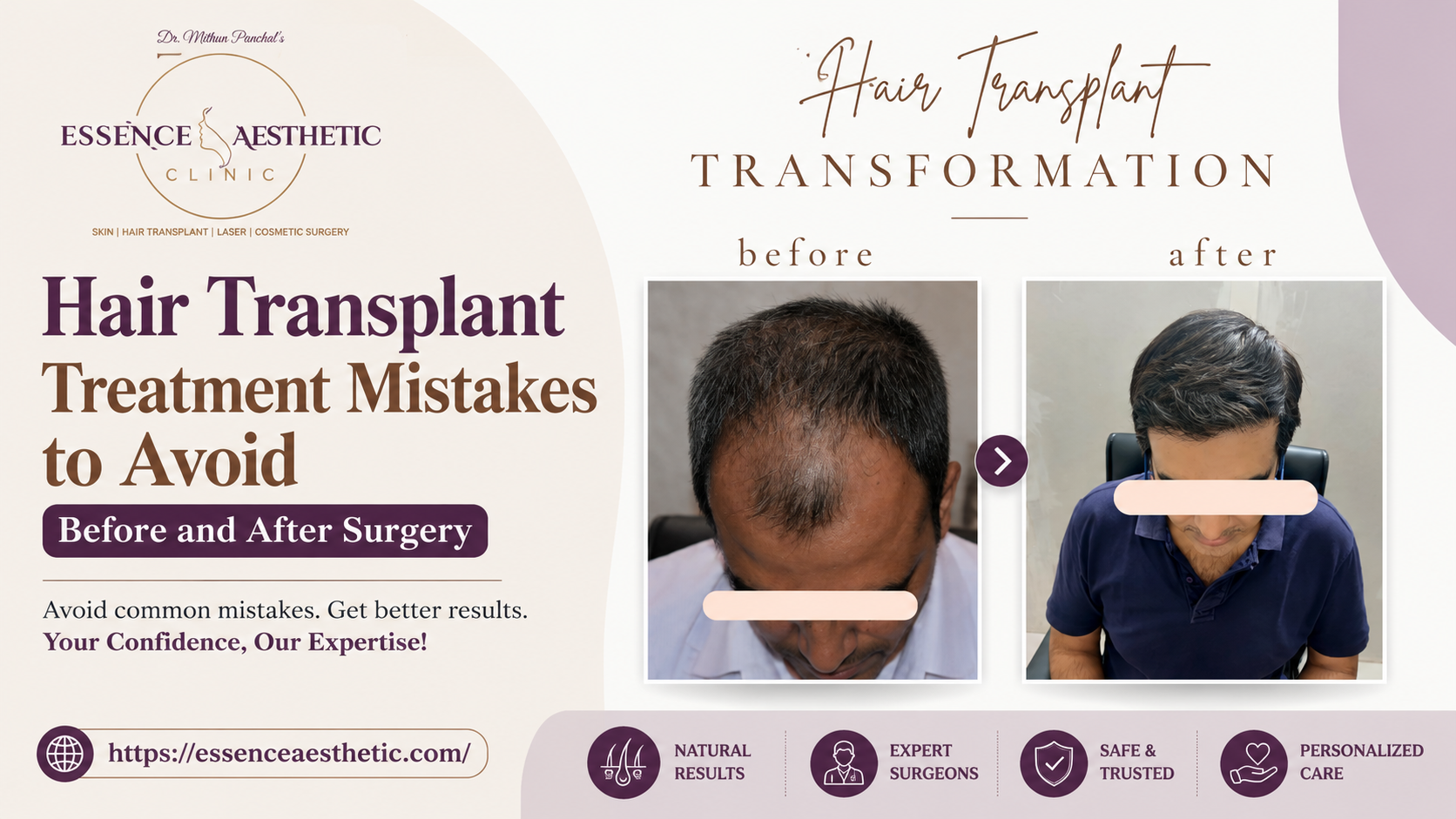
Why Proper Preparation Matters Before Hair Transplant Treatment?
How well a hair transplant surgery goes often comes down to the scalp’s condition and the patient’s general health going into the procedure. Grafts are fragile in the days around surgery. Blood circulation, skin condition and overall health can all influence how well they settle. Following the recommended preparation guidelines may support smoother healing and reduce avoidable complications. Skip the prep work, and you’re looking at a higher chance of complications, a longer recovery, or results that don’t match what you were hoping for. That’s why experienced surgeons don’t treat the pre-surgery consultation as a box-ticking exercise, but walk patients through it in detail.
Mistakes to Avoid Before Hair Transplant Treatment
- Choosing a clinic only because it is cheaper
- Not checking the surgeon’s experience
- Expecting unrealistic results
- Hiding medical conditions or allergies
- Stopping medicines without medical advice
- Smoking or drinking before surgery
- Ignoring scalp-care instructions
- Not planning for future hair loss
Mistakes to Avoid After Hair Transplant Treatment
The weeks after surgery matter as much as the procedure itself, and post hair transplant care really determines whether the follicles settle in and grow properly.
Touching or scratching the recipient area can dislodge newly implanted grafts during the early healing period. Prescribed medications need to be finished, not stopped once symptoms ease up, and washing technique matters more than people realize wrong water pressure or products used too soon can disturb grafts still settling in.
Physical strain is another one to watch. Heavy exercise too early raises blood pressure and brings on sweating, both of which can interfere with healing, and the same goes for sun exposure, since the scalp is unusually sensitive right after surgery. Tight caps or helmets worn too soon can cause friction damage before grafts are secure, and smoking or alcohol during recovery slows things down for the same reasons they do before surgery.
Then there’s the patience side of things. Skipping follow-ups means small issues go unnoticed, judging results too soon overlooks that density doesn’t show until months in, and comparing your progress to someone else’s rarely helps, since timelines differ from person to person.
How Long Does Hair Transplant Recovery Take?
The first few days usually bring some mild swelling, redness, and scabbing, which is normal and manageable with the surgeon’s aftercare instructions. By around the two-week mark, most visible scabbing has cleared and light daily activities can typically resume.
Somewhere between three and five weeks, a lot of patients notice the shedding phase where the transplanted hairs actually fall out. It sounds alarming the first time, but it’s completely normal; the follicles are still there, just resting before they start producing new growth.
New growth generally kicks in around three to four months, thickening gradually after that. Most surgeons wait until the 10 to 12-month mark to assess final results, once grafts have fully matured. Worth remembering: these are general timelines, not guarantees, since healing speed varies from person to person.
Signs It’s Time to Contact Your Surgeon
Some swelling and discomfort after surgery is expected, but certain symptoms are worth flagging right away:
- Bleeding that’s heavy or doesn’t stop with light pressure
- Swelling that’s excessive or getting worse rather than better
- Signs of infection, like redness spreading past the treated area
- Pain that’s severe or not controlled by prescribed medication
- Fever
- Unusual discharge or pus from either the donor or recipient area
None of these automatically mean something serious is wrong, but they’re not something to self-manage either; a quick call to your surgeon is always the safer move.
Side Effects of Hair Transplant Surgery – What to Expect in the Recovery Period
The hair transplant surgery side effects are generally mild and temporary if the hair transplant surgery is performed by an experienced surgeon and aftercare is taken properly. Many patients may experience swelling, redness, mild pain, itching, scabbing and temporary numbness around the treated areas in the first few days. Shock loss is also a normal part of the recovery process where some transplanted hair, or existing hair, sheds before new growth replaces it. Most of these effects will go away on their own. In rare cases, long-term complications can occur if the healing is affected or the procedure is not performed correctly. These include visible scarring, uneven hair growth, graft failure, or prolonged numbness. Choosing an experienced specialist and following post-operative instructions, as well as attending follow-up appointments, can greatly reduce the risk of complications and side effects for natural, long-lasting results.
Choosing the Right Hair Transplant Clinic
Given how much the outcome hinges on preparation, technique, and aftercare, the clinic you choose ends up being one of the bigger decisions in this process. If you’re weighing a hair best hair transplant in vadodara, or anywhere else, a few things are worth checking:
- Whether the surgeon actually performs the procedure themselves, rather than handing it off to technicians
- Whether the consultation feels transparent, with a realistic read on your hair loss and what to expect
- Whether the treatment plan is built around your specific scalp, hair type, and goals
- Whether the clinic uses modern techniques, including Whether the clinic offers appropriate techniques, such as FUE, and explains why a particular method suits your condition.
- Whether hygiene and safety standards are visibly strict
- Whether post-operative care is built in follow-ups, clear aftercare instructions not an afterthought
A clinic that’s genuinely trustworthy tends to lead with patient education and honest conversation, not pressure to sign up quickly.
Conclusion
A hair transplant treatment succeeds or falls short based on a lot more than what happens during surgery itself. The choices made beforehand, and the care taken afterward, shape scalp healing, graft survival, and how the results hold up over time. Sidestepping the common mistakes, sticking to your surgeon’s instructions, and giving the process time all go a long way toward a natural-looking outcome. A proper consultation is worth booking before deciding anything; it’s the only way to know what’s realistic in your specific case. And a clinic that builds in structured follow-up care tends to make the whole journey easier. To learn more about the hair surgery procedure or choose a reliable hair transplant clinic Vadodara, visit Essence Aesthetic Clinic today.