
Reviewed by Dr. Mithun Panchal, Plastic, Cosmetic & Hair Transplant Surgeon , M.B.B.S ,M.S ( Gen Surg ), M.Ch ( Plastic Surgery) — Essence Aesthetic Clinic, Vadodara
Many people who deal with breakouts run into a second problem: the mark left behind once the pimple is gone. These leftover spots can stick around for weeks, sometimes months. That’s why a proper acne marks skin care routine matters just as much as treating the breakout itself. This guide explains why these marks show up, how to tell them apart from true scarring, and what actually helps them fade.
What Are Acne Marks?
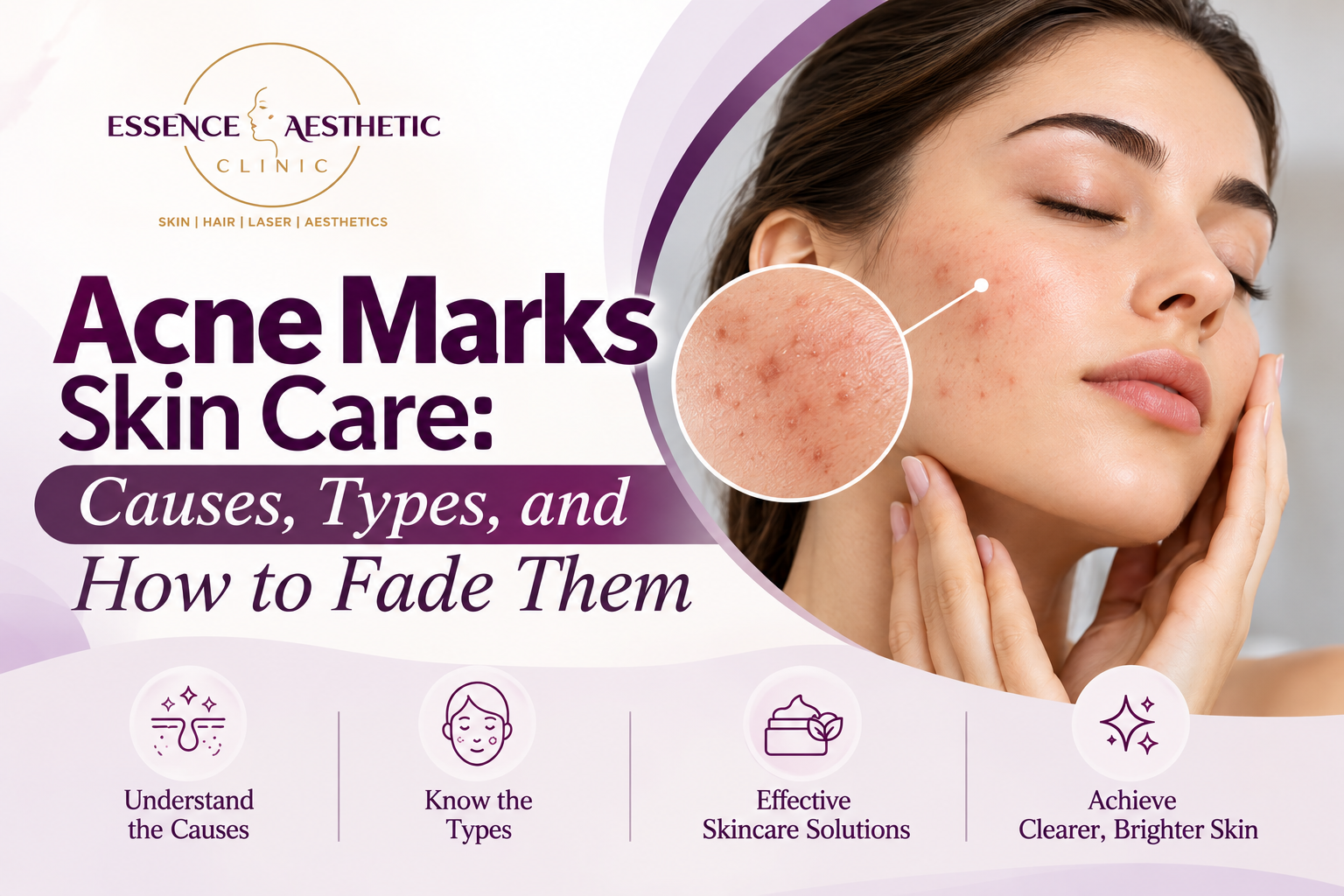
Acne marks are flat spots of discoloration that appear once a pimple has healed. Depending on your skin tone and how deep the original breakout was, they can look pink, red, brown, or somewhere in between. Unlike active acne, however, a mark isn’t raised or inflamed. It’s simply a leftover change in skin color.
Dermatologists often use two terms for these marks. They call brown marks post-inflammatory hyperpigmentation (PIH). These appear when inflammation from a pimple pushes the skin to produce extra melanin in that spot. Red or pink marks, on the other hand, go by the name post-inflammatory erythema (PIE).
What Causes Acne Marks?
At the root of it, it’s all about inflammation. A pimple irritates the surrounding skin, and that irritation can disrupt the cells that produce pigment. As a result, even after the blemish heals, the skin often holds on to a visible trace of it.
Several factors make marks more likely, or make them last longer:
- Picking or squeezing pimples. This adds extra trauma to skin that’s already inflamed.
- Sun exposure. UV rays can darken existing marks and slow down how fast they fade.
- Deeper, more inflamed breakouts. These usually leave a more noticeable mark than a small surface-level pimple.
- Deeper skin tones. Darker skin is generally more prone to post-inflammatory hyperpigmentation.
- Recurring acne. Every new breakout is another chance for a new mark to form.
Types of Acne Marks
Marks don’t all look or behave the same way. Knowing which type you have helps you set realistic expectations for how long it will take to fade.
- Red or pink marks (PIE) appear soon after a pimple heals. They come from dilated or damaged small blood vessels near the skin’s surface. For many people, they fade on their own within weeks to a few months.
- Brown or dark marks (PIH) result from excess melanin. They usually last longer than red marks, and sun exposure can make them darker.
- Acne scars belong to a separate category. While marks only affect color, scars involve an actual change in skin texture (pitted, indented, or raised). This happens because a deep breakout damages the skin’s collagen structure as it heals.
Acne Marks vs Acne Scars: What’s the Difference?
People often use these two terms interchangeably, but they mean different things.
|
Feature |
||
|
Appearance |
Flat discoloration (red, pink, or brown) |
Textured: pitted, indented, or raised |
|
Skin texture |
Unaffected |
Changed due to collagen damage |
|
Main cause |
Pigment or blood vessel changes after inflammation |
Structural damage to deeper skin layers |
|
Typical approach |
Skincare routine, sun protection, targeted ingredients |
Often needs professional treatment (peels, microneedling, lasers) |
|
Fades on its own? |
Usually yes, over time |
Rarely, without treatment |
This difference matters because discoloration and true scarring need different approaches. Marks generally respond well to consistent at-home care, while true scars often need a dermatologist’s help. [Internal link: acne scar treatment page]
Building a Simple Acne Marks Skin Care Routine
A consistent, gentle acne marks skin care routine is the foundation. The goal isn’t to throw every active ingredient you can find at your skin. Instead, it’s to support the healing process that’s already happening and avoid further irritation.
Morning routine:
- Gentle, non-stripping cleanser
- Brightening or antioxidant serum, such as vitamin C
- Lightweight moisturizer
- Broad-spectrum sunscreen (SPF 30 or higher)
Evening routine:
- Gentle cleanser to remove the day’s buildup
- One targeted active ingredient, which you introduce gradually rather than all at once
- Moisturizer to support the skin barrier
Before you add any new product, patch test it on a small area for a few days first.
Skin Care Tips to Prevent New Acne Marks
Prevention isn’t complicated, but it does take some discipline.
- Keep your hands off. Picking or squeezing a pimple is one of the most avoidable causes of darker, longer-lasting marks. It also raises the risk of true scarring. It’s tempting, but it rarely ends well.
- Treat active acne early. Fewer breakouts mean fewer chances for new marks to form. [Internal link: acne treatment page]
- Don’t skip sunscreen. This article repeats this point for a reason: sun exposure darkens marks and makes them last longer.
- Introduce new actives slowly. Jumping straight into strong exfoliants or high-percentage acids can irritate skin that’s already sensitive.
- Keep the rest of your routine simple. Scrubbing harder or cleansing more often won’t speed anything up. Instead, it usually adds more irritation.
How Long Do Acne Marks Take to Fade?
People understandably want a number here, but no single timeline applies to everyone. Fading speed depends on the type of mark, your skin tone, how deep the original breakout went, and how consistently you use sunscreen.
In general, red or pink marks fade faster, often within weeks to a few months. Brown marks from post-inflammatory hyperpigmentation usually take longer, sometimes several months or more. This is especially true if sun exposure keeps undoing your progress. [External link: dermatology source for fading timelines]
If you’re a few weeks in and don’t see much change yet, that’s not necessarily a bad sign. It simply means the process is working at its usual, slow pace.
When Should You See a Dermatologist?
Many marks improve on their own with a good skincare routine, but not always. Consider getting a professional opinion if:
- Discoloration hasn’t changed after several months of consistent care
- You notice texture changes, not just color, such as pitting or raised areas
- Breakouts keep coming back frequently or severely
- Your skin reacts badly to products, with irritation or redness
- You’re unsure which ingredients suit your skin type
A dermatologist can determine whether you’re dealing with marks, scars, or both. They can also recommend options such as chemical peels, microneedling, or prescription treatments if needed. If you’re in Vadodara, the team at Essence Aesthetic can assess your skin and suggest the right next steps. [Internal link: consultation or booking page]
Conclusion: Patience Is Key in Acne Marks Skin Care
Acne marks are a common and usually temporary part of the skin’s healing process. Once you understand what causes them, it becomes easier to manage them with patience. A thoughtful acne marks skin care routine, built around gentle cleansing, targeted ingredients, and daily sunscreen, supports your skin’s natural fading process over time. However, if marks last longer than expected, or you notice pitting rather than plain discoloration, get a professional opinion instead of guessing.